
Commercial Kitchen Epoxy Flooring: Safe, Durable, and Easy to Maintain
Introduction: The Demands of Commercial Kitchen Flooring
In a fast-paced kitchen, the flooring needs to do more than look good. It must resist heat, water, oil, and chemicals — all while providing a non-slip, hygienic surface. That’s why commercial kitchen epoxy flooring has become the gold standard in restaurants, hotels, hospitals, and food service environments.
If you're planning a new build or flooring renovation, this guide explains everything you need to know about epoxy flooring for commercial kitchens, including features, pricing, and why it outperforms other materials in demanding culinary spaces.
Why Choose Epoxy Flooring for Commercial Kitchens?
When it comes to commercial kitchen flooring epoxy, the benefits are undeniable:
-
Slip resistance: Additives like quartz or aluminum oxide improve traction
-
Chemical resistance: Epoxy handles grease, acids, and cleaning agents with ease
-
Heat and steam durability: Ideal for kitchens with fryers and steam tables
-
Seamless design: No grout lines means fewer areas for bacteria to hide
-
Fast curing: Many systems are ready for foot traffic within 24–48 hours
Compared to vinyl or tile, epoxy commercial kitchen flooring offers better longevity and less downtime during maintenance.
It also holds up better in areas with frequent temperature changes or water exposure — two factors that can degrade traditional flooring materials quickly. The durability of epoxy translates into lower long-term costs, especially for businesses aiming to avoid frequent shutdowns for repairs or replacements.
Key Features That Make Epoxy Flooring Kitchen-Ready
Professional-grade epoxy flooring commercial kitchen systems are engineered for safety and compliance:
- USDA & FDA compliant materials
- Thermal shock tolerance for hot washdowns and steam cleaning
- Optional cove base integration for wall-to-floor sanitary transition
- Color-coded zones for safety and food handling designations
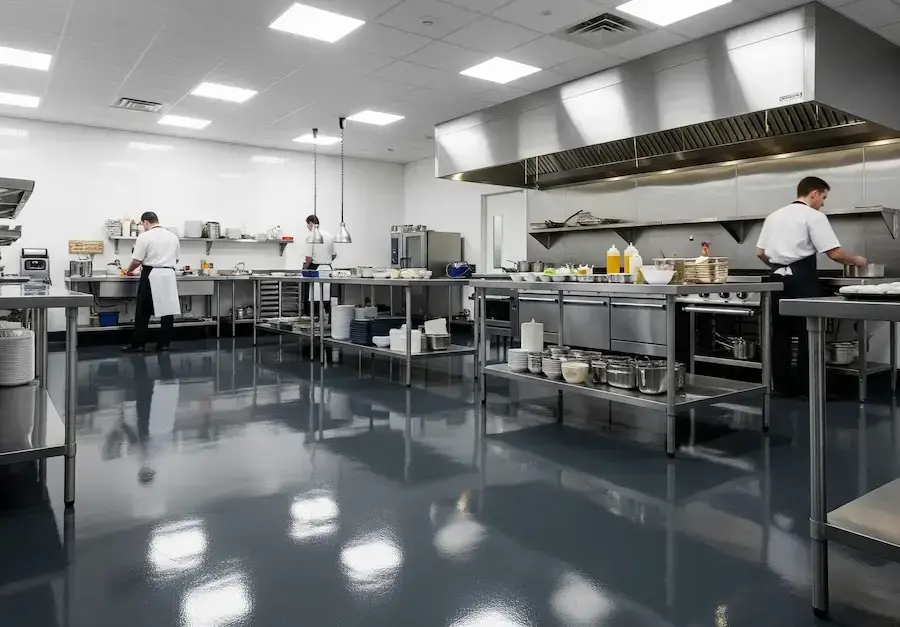
Epoxy’s monolithic surface not only enhances cleanliness but also creates a polished, professional look for front-of-house kitchens.
In spaces where hygiene and visual presentation matter equally, epoxy delivers a clean, glossy finish that aligns with modern commercial kitchen design. This is especially helpful in open-kitchen layouts where customers can see into prep areas.
Understanding Commercial Kitchen Epoxy Flooring Cost
Like any construction material, the commercial kitchen epoxy flooring cost varies depending on:
-
Floor condition: Prep work like crack repair or old coating removal increases the price
-
Thickness: 1/8" to 1/4" systems provide different levels of durability
-
Additives: Slip resistance, antimicrobial finishes, and decorative flakes or quartz can raise the total
-
Square footage: Larger areas may receive bulk pricing
On average, expect to pay $7 to $15 per square foot, with specialized systems reaching $20+ for extreme-duty zones.
Additionally, installation time and any necessary downtime can affect your total cost. Epoxy offers advantages here too, with rapid-curing systems minimizing kitchen closures. Choosing experienced installers ensures accuracy in budgeting and fewer delays.
Comparison Table: Epoxy vs. Other Commercial Kitchen Flooring
Choosing the right flooring for a commercial kitchen means balancing performance, hygiene, safety, and cost. With so many materials available, it helps to directly compare epoxy against other common options used in the food service industry. The following table highlights how epoxy stands up to quarry tile, vinyl composite tile, and basic concrete sealers across key performance metrics:
| Feature | Epoxy Flooring | Quarry Tile | Vinyl Composite Tile | Concrete Sealer |
| Slip Resistance | Excellent (additives) | Good (textured) | Moderate | Low |
| Chemical Resistance | High | Medium | Low | Low |
| Thermal Shock | Excellent | Good | Poor | Poor |
| Seamless Installation | Yes | No (grout lines) | No | No |
| Lifespan | 10–20 years | 5–15 years | 5–10 years | 1–2 years |
| Avg. Cost per Sq. Ft. | $7–$15 | $8–$20 | $3–$8 | $1–$3 |
Local Insight: Miami’s Hospitality Industry Chooses Epoxy
In Miami’s bustling food scene, safety and style are non-negotiable. From hotel kitchens in South Beach to high-volume restaurants in Wynwood and catering hubs in Little Havana, commercial kitchen epoxy flooring is being used to boost hygiene and streamline operations.
Why Miami kitchens choose epoxy:
- Meets local health code requirements
- Stands up to salt air, heat, and high humidity
- Easy to clean between lunch and dinner rushes
Epoxy Flooring Miami offers tailored solutions for food-grade and health-inspected environments.
Epoxy’s performance under Miami’s specific conditions makes it a go-to for local builders and designers. The ability to install custom-colored finishes that reflect brand identity is an added benefit for businesses that blend form and function.
FAQ: Epoxy Flooring for Commercial Kitchens
How long does epoxy flooring last in a commercial kitchen?
Most epoxy systems last 10–20 years with proper cleaning and periodic recoating. Daily foot traffic, heavy equipment, and thermal exposure are all considered in the system design. Routine maintenance, such as sweeping and mopping, extends the coating's life. Many systems can be refreshed with a new topcoat to extend serviceability.
Is epoxy safe for kitchens with hot fryers and ovens?
Yes. Epoxy coatings are designed to handle high heat and thermal cycling. Specialty blends also resist steam, grease, and acidic spills. These systems are commonly tested for fire and thermal ratings to ensure safety. For areas with intense heat exposure, high-temperature epoxy formulas can be used.
How soon can the kitchen reopen after installation?
Fast-curing epoxy can often allow light foot traffic in 24 hours and full use in 48–72 hours. This reduces restaurant downtime significantly. Choosing accelerated curing options can also help meet urgent timelines. Always follow manufacturer recommendations for full cure before heavy use.
Can epoxy be used in back-of-house and front-of-house kitchens?
Absolutely. Epoxy comes in clear and colored options, with decorative flakes or metallic blends for public-facing spaces. You can customize finishes for aesthetics or zone identification. Epoxy seamlessly transitions between different sections of the kitchen.
What’s the best way to clean epoxy kitchen flooring?
Use a non-abrasive scrubber with a degreasing agent. Avoid acidic cleaners and rough brushes that can dull the topcoat over time. Regular cleaning helps maintain anti-slip texture and shine. Many kitchens adopt a nightly cleaning routine to preserve performance and appearance.
Final Thoughts: Clean, Compliant, Commercial-Grade Flooring
From ease of maintenance to industry compliance, commercial kitchen epoxy flooring is a practical solution that doesn’t compromise on performance or safety. Its seamless, slip-resistant, and durable nature makes it the go-to choice for demanding culinary environments.
Epoxy not only meets health and safety standards but also enhances the workspace's aesthetic and functional appeal. It reflects light to brighten kitchens, withstands heavy foot traffic and cart wheels, and minimizes cleaning time — all of which are vital in fast-paced environments.
Whether you're running a boutique eatery or managing a multi-kitchen hotel, epoxy flooring for commercial kitchens delivers the reliability and finish you need to serve with confidence. With proper installation and care, your flooring will remain attractive and compliant for years to come.
Contact Epoxy Flooring Miami for expert consultation and fast, code-compliant installation services that keep your kitchen operating smoothly.
Upgrade to Safer, Stronger Flooring – Book Your Epoxy Consultation Today!